Most homeowners don’t think much about their water until it starts creating little annoyances. A glass comes out of the dishwasher covered in spots. The shower door develops a cloudy film. Tap water tastes slightly like a swimming pool. Suddenly, something that used to be completely ordinary becomes one more thing on the household to-do list.
The good news is that many common water-quality problems have practical solutions. The trick is figuring out what you’re dealing with before buying equipment. Water that looks identical from two different homes can behave very differently depending on its mineral content, source, plumbing, and treatment.
A little knowledge can go a long way.
The Story Behind Those White Deposits
If your faucets and showerheads seem to collect a chalky residue no matter how often you clean them, you’re probably familiar with hard water scale.
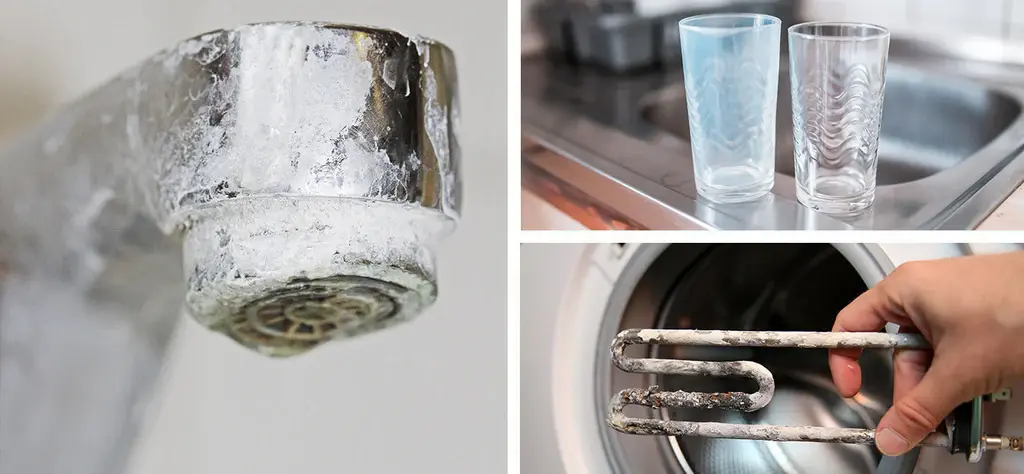
Hard water contains dissolved minerals, mainly calcium and magnesium. When the water evaporates, these minerals can remain behind on surfaces. Over time, deposits may become increasingly difficult to remove.
You’ll often see them around sinks, shower doors, kettles, coffee makers, and water heaters. They aren’t necessarily a sign that something dangerous is happening, but they can be a persistent nuisance.
More importantly, scale can build up inside water-using equipment as well. That can make maintenance more difficult and may affect performance over time.
Why Hard Water Affects Cleaning
Hard water can also change how everyday cleaning products behave.
Calcium and magnesium can interfere with soap, making it harder to create a rich lather. You may find yourself using more soap or detergent than expected, only to discover that surfaces still don’t feel completely clean.
Shower walls can develop soap scum. Glassware may show spots after drying. Laundry can feel different, too.
If these issues keep returning despite your best cleaning efforts, testing the water hardness can help determine whether the water itself is contributing.
When Tap Water Tastes Like a Swimming Pool
Another common complaint is chlorine taste.
Chlorine is widely used in municipal water treatment because it helps control harmful microorganisms. So noticing some chlorine doesn’t automatically mean your water is unsafe.
The problem for many people is taste and odor.
Some tap water may have a faint chlorine smell, while other supplies can be more noticeable. The intensity can vary depending on the water source, treatment process, and conditions within the distribution system.
If you dislike the taste, activated carbon filtration is commonly used to reduce chlorine and improve the flavor and smell of drinking water.
Testing Before You Treat
Before spending money on a filtration system, it makes sense to learn what your water actually contains.
A basic water test may provide information about hardness, pH, chlorine, iron, and other characteristics. More detailed laboratory testing can be useful when there’s a concern about a specific contaminant.
This is particularly important for private well owners because groundwater conditions can vary and change over time.
Testing doesn’t have to be complicated. Think of it as getting a basic map before taking a road trip. You can technically start driving without one, but knowing where you’re going usually makes things easier.
Understanding Water Filtration
The term water filtration covers a surprisingly wide range of technologies.
Activated carbon filters are commonly used for taste and odor improvement and can reduce chlorine and certain other compounds. Sediment filters are designed to capture particles. Reverse osmosis systems use multiple stages and a membrane to reduce a range of dissolved substances.
Other systems are designed for specific minerals or contaminants.
The important thing is to understand what a particular filter is designed to remove. A sediment filter isn’t intended to solve hardness, and a standard carbon filter isn’t automatically suitable for every dissolved contaminant.
There’s no universal filter that does everything.
Point-of-Use Filtration Can Be Enough
Not every household needs a whole-house treatment system.
If your main concern is drinking-water taste, an under-sink filter may provide the targeted treatment you’re looking for. It treats water at a specific faucet, meaning you don’t have to filter water used for toilets, outdoor hoses, or other purposes.
This can be a practical choice when the issue is limited to drinking and cooking water.
For households dealing with scale throughout the plumbing, however, point-of-use filtration won’t address the underlying hardness problem. That’s where a broader treatment approach may make more sense.
When Whole-Home Treatment Is Worth Considering
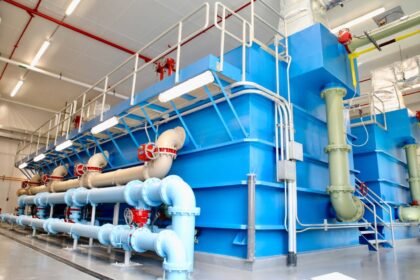
Whole-house systems treat water as it enters your property, allowing treated water to reach multiple fixtures.
They may be useful when water-quality concerns affect showers, laundry, appliances, and plumbing as well as drinking water.
But whole-home treatment isn’t automatically the better choice. It can involve higher installation costs and more equipment to maintain.
The right decision depends on your water test results, household usage, budget, and the problem you’re trying to solve.
Don’t Forget Your Appliances
Water quality can quietly affect appliances over the years.
Hard-water deposits may accumulate in water heaters, dishwashers, washing machines, coffee machines, and other equipment that regularly uses water. Sediment can also create issues in certain systems.
Proper treatment may help reduce some of these effects, but regular appliance maintenance still matters.
Follow manufacturer instructions, clean equipment as recommended, and replace filters on schedule.
A treatment system is helpful, but it isn’t a substitute for basic care.
Maintenance Is Where Good Intentions Often Fail
Buying a filter is easy. Remembering to change it six months later? That’s where things get interesting.
Every treatment system has maintenance requirements. Filters become exhausted. Softener systems may need salt and servicing. Reverse osmosis systems contain several components that require periodic replacement.
Set reminders on your phone or calendar. Keep replacement parts accessible. Write down service dates.
Small habits like these help keep a water treatment system performing the way it was intended.
Better Water Doesn’t Have to Mean Complicated Water
You don’t need to turn your home into a science experiment to improve your water.
Start by identifying what bothers you. Is it mineral scale? An unpleasant chlorine taste? Sediment? Something else entirely?
Test the water where appropriate, understand the results, and choose treatment designed for the actual issue.
The best solution isn’t necessarily the biggest system or the one with the longest list of features. It’s the system that does the job you need, fits your household, and can be maintained without becoming a constant headache.
Good water treatment is really about making everyday life a little easier. Fewer deposits to scrub. Better-tasting drinking water. Less worry about what’s happening inside your plumbing.
And sometimes, that’s more than enough.