For enthusiasts seeking more power, sound, and efficiency from their BMW M-series, few upgrades deliver as much impact as aftermarket downpipes. Whether you drive the thunderous BMW M5 G90/G99 or the agile BMW M3 G80, upgrading to high-quality secondary or primary downpipes can transform your driving experience.
In this article, we’ll explore what downpipes are, the difference they make in these iconic models, and why performance shops and tuning fans consider them a must-have mod.
Understanding the Role of Downpipes in BMW’s Exhaust System
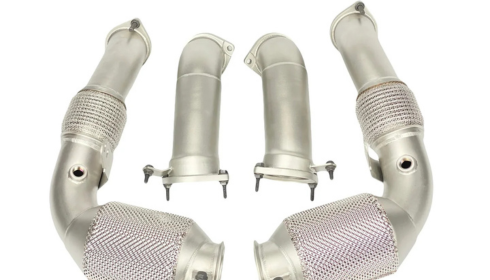
A downpipe connects the turbocharger to the rest of your exhaust system. In turbocharged vehicles like the M5 G90/G99 and M3 G80, this component plays a crucial role in managing exhaust flow and turbo efficiency. OEM (factory) downpipes often come equipped with restrictive catalytic converters, which, while necessary for emissions, also hinder performance.
Aftermarket downpipes—whether high-flow catted or catless—reduce backpressure, allowing exhaust gases to exit faster. This directly improves turbo spool time, horsepower, torque, and even engine sound.
BMW M5 G90/G99 Secondary Downpipes – A Popular Power Upgrade
The bmw m5 g90 g99 secondary downpipes offer a balanced approach to performance gains. Unlike primary downpipes, which are closer to the turbo and heavily monitored by oxygen sensors, secondary downpipes are located further downstream and are less likely to trigger engine warning lights when upgraded.
Installing aftermarket secondary downpipes can:
- Enhance exhaust note with a deeper, throatier tone
- Increase airflow efficiency and reduce turbo lag
- Provide modest horsepower and torque gains without requiring a full ECU tune
- Maintain a relatively OEM-like driving experience with fewer emissions concerns
Enthusiasts favour this upgrade for daily-driven G90/G99s where reliability and subtlety are still important.
BMW M3 G80 Downpipes – Unlocking the S58’s True Potential
The G80 M3’s S58 twin-turbo inline-6 engine is already a beast in stock form, but it’s also built to handle much more. One of the first steps in waking up this engine is a set of performance downpipes.
Upgrading the bmw m3 g80 downpipes provides a host of benefits:
- Significant performance increase—up to 40-60 hp gains with tuning
- Sharper throttle response and turbo spool
- A dramatic change in exhaust tone (especially when paired with a performance cat-back system)
- The ability to run higher boost safely with supporting mods
While catless downpipes offer the highest performance gain, catted options with high-flow catalytic converters are also available for drivers who want to remain emissions-compliant while still improving power output.
Do You Need a Tune After Installing Downpipes?
It depends on the setup. For secondary downpipes on the M5 G90/G99, you might be able to run them without a tune—though pairing with a Stage 1 or Stage 2 ECU remap will unlock more power and ensure optimal air-fuel ratios.
For G80 M3 primary downpipe upgrades, a tune is highly recommended. The factory ECU will detect the removal of catalytic converters and may enter limp mode unless programmed accordingly. A tune also maximizes performance gains and can help manage the increased boost pressure and exhaust flow.
Sound and Driving Feel – It’s Not Just About Numbers
Beyond dyno gains, what owners really rave about is the feel of the car post-installation. The improved throttle response, sharper turbo spool, and aggressive exhaust note make these high-performance BMWs even more engaging. For track days, spirited driving, or just enjoying a morning commute, downpipes add a visceral edge.
Final Thoughts: The Right Upgrade for the Right Driver
Whether you’re modding your M5 G90/G99 for weekend fun or transforming your G80 M3 into a track-ready weapon, upgraded downpipes are a worthwhile investment. They’re not just about raw numbers—they’re about unlocking the true character of your BMW.