Clothing is a notoriously difficult gift to get right, and handloom pieces carry the added pressure of feeling more significant than an ordinary outfit. Done well, though, a thoughtfully chosen handwoven piece tends to be remembered far longer than most gifts, precisely because it carries a story alongside its use.
Why a handwoven piece says more than a generic gift
A handloom saree or dupatta is rarely mistaken for an impulse purchase. The time and craftsmanship behind it communicate consideration in a way that is difficult to replicate with a generic gift, which is part of why these pieces tend to be kept and worn for years rather than set aside.
What to gift a mother, a mentor, a colleague, or a bride
For a mother or mother figure
A classic weave in a colour she already gravitates towards, such as a Maheshwari or Chanderi saree in a familiar palette, tends to be appreciated more than an experimental print. Mothers are often more sentimental about craftsmanship and heritage than about the newest trend.
For a mentor or senior colleague
A structured stole or dupatta is a safer, more versatile choice than a full saree, since it works across body types and personal styles without needing precise sizing or draping preferences.
For a close friend or sister
This is where a more experimental piece, such as a hand block printed kurta set or a statement Phulkari dupatta, can work well, since the relationship usually allows for a bit more personal judgement about their taste.
For a bride
A silk saree or a full suit set in rich, celebratory tones is traditionally a strong choice, ideally something distinct from what is likely already part of her wedding trousseau.
Statement pieces such as handcrafted Phulkari dupattas work particularly well as gifts because they add a bold, celebratory element to an outfit without requiring the recipient’s exact measurements.
Reading the occasion before the fabric
A festive occasion generally calls for richer fabrics like silk or Banarasi weaves, while a casual gift for a birthday or a small get-together is better suited to lighter cotton or linen pieces. Matching the formality of the fabric to the occasion avoids the awkwardness of an overly ornate gift for a casual event, or an overly plain one for a major celebration.
Practical tips for gifting something you have not tried on the recipient
Dupattas, stoles, and unstitched dress material sidestep sizing concerns entirely, making them the safest choice when gifting someone whose exact fit is uncertain. For sarees, a free-size gift is generally safe, though it helps to have a rough sense of the recipient’s height and usual draping style, since a saree that suits a petite frame may not suit a taller one in quite the same way.
Wrapping the gift with the story of the craft
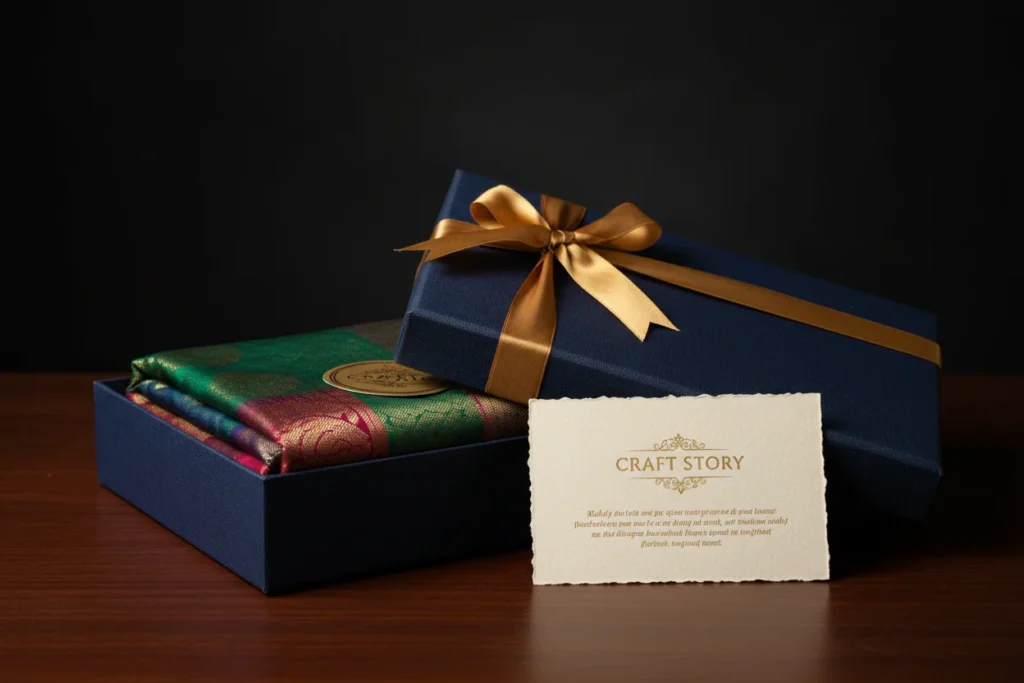
A short note about the weaving region, the technique, or the artisan community behind the piece adds meaningful context that most recipients would otherwise never learn. This small addition often becomes the detail people remember most about the gift.
Conclusion
Gifting handloom well comes down to matching the piece to the relationship and the occasion, rather than defaulting to whatever looks most impressive on a screen. A little thought at the selection stage goes a long way toward making the gift feel personal rather than generic.